✨ This article was AI edited. Editorial responsibility: Pike Speak Motorsports.
Low Seat Height Motorcycles for Petite & Short Riders: Inseam Ergonomics, Suspension Lowering & Model Rankings
For petite and shorter riders (particularly riders with an inseam measurement of 26 to 30 inches / 66–76 cm), shopping for a motorcycle can often feel intimidating. Showroom motorcycles with tall seat heights (32 to 36 inches / 81–91 cm) force shorter riders onto the very tips of their toes at red lights, creating profound anxiety during low-speed parking maneuvers, off-camber stops, and sudden emergency braking. However, finding the right motor voor kleine vrouwen (motorcycles tailored for shorter female and male riders) does not mean settling for boring or underpowered bikes. By mastering seat junction taper geometry, aftermarket lowering link kinematics, ergonomic handlebar reach adjustments, and specialized low-profile riding footwear, riders of any height can achieve total confidence on two wheels. This comprehensive buyer’s guide and ergonomic manual explores the top-rated low seat height motorcycles across cruisers, naked bikes, retro standards, and adventure tourers.
The Physics of Motorcycle Ergonomics: Why Seat Width Matters More Than Seat Height
Many beginner riders look strictly at the manufacturer’s published seat height specification (e.g., 28.5 inches). In practice, published seat height represents only half of the ergonomic equation:
1. Seat Arch Width & Fuel Tank Taper (The “Stand-Over” Width)
A motorcycle with a 30-inch seat height and an ultra-narrow V-twin frame (such as a Honda Rebel 500 or Harley Nightster) allows your legs to drop straight down perpendicular to the ground. Conversely, an inline-four sportbike with a 30-inch seat height and a wide dual-spar perimeter frame forces your thighs outward in a wide bowlegged stance, effectively consuming 2 to 3 inches of valuable leg reach.
2. Center of Mass & Low-Speed Tipping Leverage
Low seat height motorcycles typically place their heavy engine crankcase, transmission, and battery low in the chassis. When a motorcycle’s center of gravity is positioned close to the asphalt, catching the bike at a 15-degree off-camber stop requires a fraction of the physical muscular effort needed to stabilize a top-heavy adventure bike.
Top-Rated Motorcycles for Petite Riders by Category
| Motorcycle Model | Category / Style | Stock Seat Height | Wet Curb Weight | Engine & Power |
|---|---|---|---|---|
| Honda Rebel 300 / 500 / 1100 | Modern Bobber Cruiser | 27.2 in (690 mm) | 364 – 487 lbs | 286cc – 1084cc (Smooth parallel twins / DCT auto available) |
| Kawasaki Vulcan S 650 (Ergo-Fit) | Sport Cruiser | 27.8 in (705 mm) | 498 lbs | 649cc Ninja parallel twin (61 hp) |
| BMW F 900 R (Factory Low Suspension) | Dynamic Naked / Roadster | 30.3 in → 29.1 in (740 mm) | 465 lbs | 895cc parallel twin (99 hp) |
| Triumph Street Twin / Speed 400 | Modern Classic / Retro | 30.1 in → 29.3 in | 375 – 436 lbs | 398cc – 900cc High-Torque Bonneville twin |
| Yamaha MT-03 / YZF-R3 | Lightweight Naked / Sport | 30.7 in (780 mm) | 373 lbs | 321cc high-revving twin (42 hp) |
| Harley-Davidson Nightster / Sportster S | American Performance Cruiser | 27.8 in → 28.9 in | 481 – 502 lbs | 975cc – 1250cc Revolution Max liquid-cooled |
Customizing Motorcycle Ergonomics for Shorter Riders
If you fall in love with a motorcycle that feels slightly too tall in stock trim, you can easily gain 1.5 to 3 inches of effective reach through four non-destructive modifications:
1. Custom Low-Profile / Scalloped Seats
Replacing the factory foam cushion with high-density memory gel and sculpting the lateral foam shoulders (narrowing the front nose of the seat) drops reach by 0.75 to 1.5 inches without altering the bike’s chassis geometry or suspension travel.
2. Aftermarket Suspension Lowering Links & Fork Drops
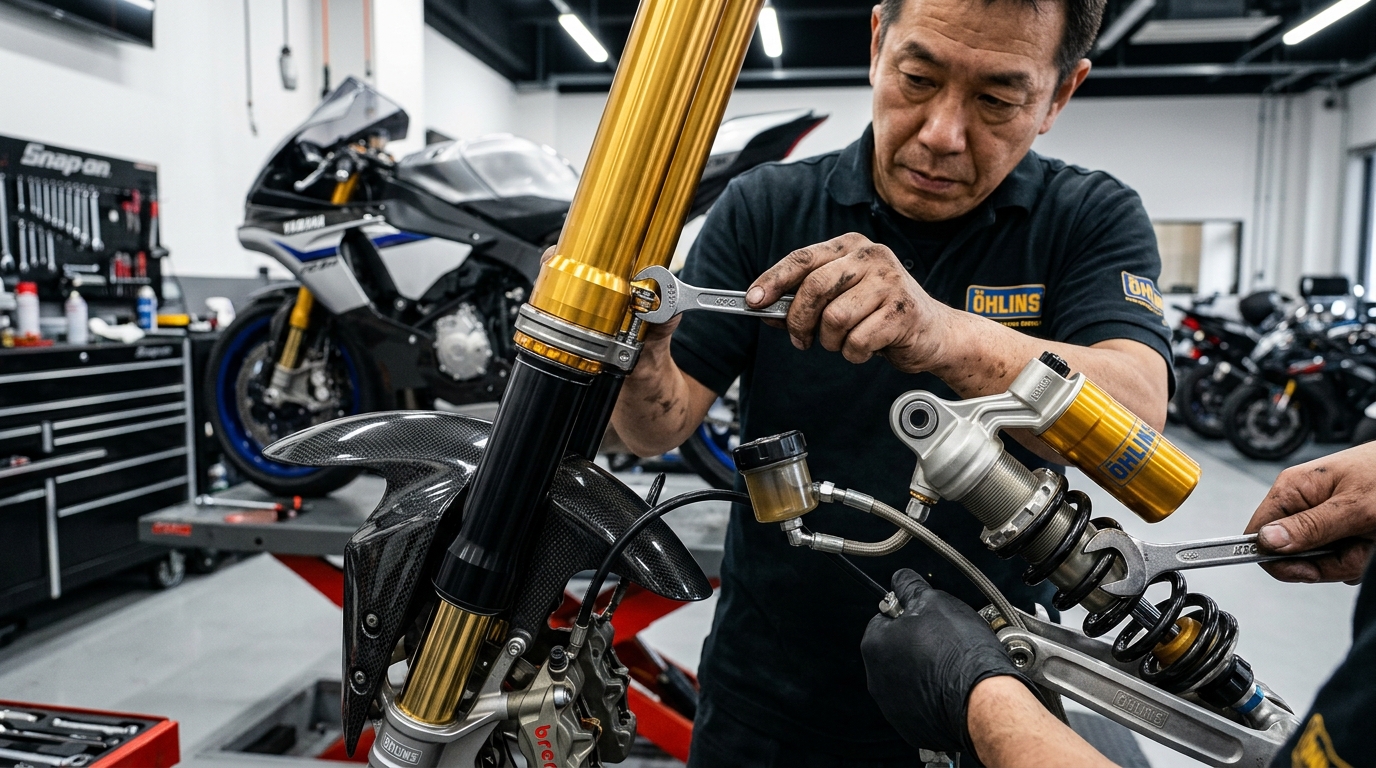
Billet aluminum lowering links (dogbones) replace the rear shock linkage to drop the rear chassis by 1.0 to 1.5 inches. Critical safety rule: Whenever the rear suspension is lowered, you must slide the front fork tubes up in the triple clamps by a proportionate amount (typically 10mm to 15mm) to maintain stock steering rake, trail, and high-speed stability. You must also shorten the side stand (kickstand) to prevent the bike from tipping over when parked.
3. Handlebar Risers & Offset Pullback Clamps
Petite riders often have shorter arm spans, which forces them into an uncomfortable forward hunch to reach the handlebars. Installing 1-inch pullback risers brings the handlebar grips closer to your torso, allowing an upright spine angle and relaxed elbows for effortless U-turns.
4. Elevated Insole Riding Boots
Specialized women’s motorcycle touring boots (such as the Daytona Lady Star GTX or TCX Aura Plus) incorporate hidden 1.0-to-1.5-inch internal heel and arch lifts. This extra sole thickness gives your feet instant solid purchase on the asphalt at stops.
Kawasaki Ergo-Fit System: Tailored from the Showroom Floor
The Kawasaki Vulcan S features the motorcycle industry’s only fully modular factory fitment system called Ergo-Fit:
- Footpegs: 3 adjustable positions (Reduced Reach, Mid Reach, Extended Reach) shifting pegs forward or backward by 1 inch.
- Handlebars: Standard or Reduced Reach bars bringing controls 1.7 inches closer.
- Seats: 3 sculpted seat profiles moving the rider forward or rearward.
Frequently Asked Questions (FAQ)
Can a rider under 5’2″ (157 cm) ride a full-size motorcycle?
Absolutely! Riders under 5’2″ regularly ride cruisers, naked bikes, and even lowered adventure tourers. Confidence comes from learning the “one-foot-down” technique (planting your left foot flat while keeping your right foot on the rear brake).
Does lowering a motorcycle ruin its handling?
Lowering links slightly reduce ground clearance and cornering lean angle before footpeg scraping occurs. However, for street and commuting use, a balanced front and rear lowering setup provides exceptional, predictable handling.
Are automatic transmission motorcycles easier for short riders?
Yes. Motorcycles equipped with Honda’s Dual-Clutch Transmission (DCT)—like the Rebel 1100 DCT—eliminate the clutch lever and foot shifter entirely, allowing riders to focus 100% on balance, throttle control, and braking.
What is the lightest street motorcycle with a low seat?
The Yamaha MT-03 and Honda Rebel 300 weigh only ~364 to 373 lbs with seat heights under 30.7 inches, making them effortless to maneuver in tight spaces.
Pillion Riding & Luggage Loading Dynamics for Shorter Motorcyclists
When shorter riders carry heavy touring luggage, hard saddlebags, or a passenger (pillion), the extra weight compresses the rear suspension, lowering the static seat height by an additional 0.5 to 1.0 inch. While this makes reaching the ground easier at stops, it alters motorcycle handling dynamics:
- Shock Preload Adjustment: Always increase the rear spring preload collar by 2 to 3 notches when carrying passengers to prevent the suspension from bottoming out over railroad tracks or highway dips.
- Passenger Mounting Etiquette: Have your passenger mount and dismount only while you have both feet firmly planted, the front brake locked, and the kickstand deployed as a secondary safety pivot.