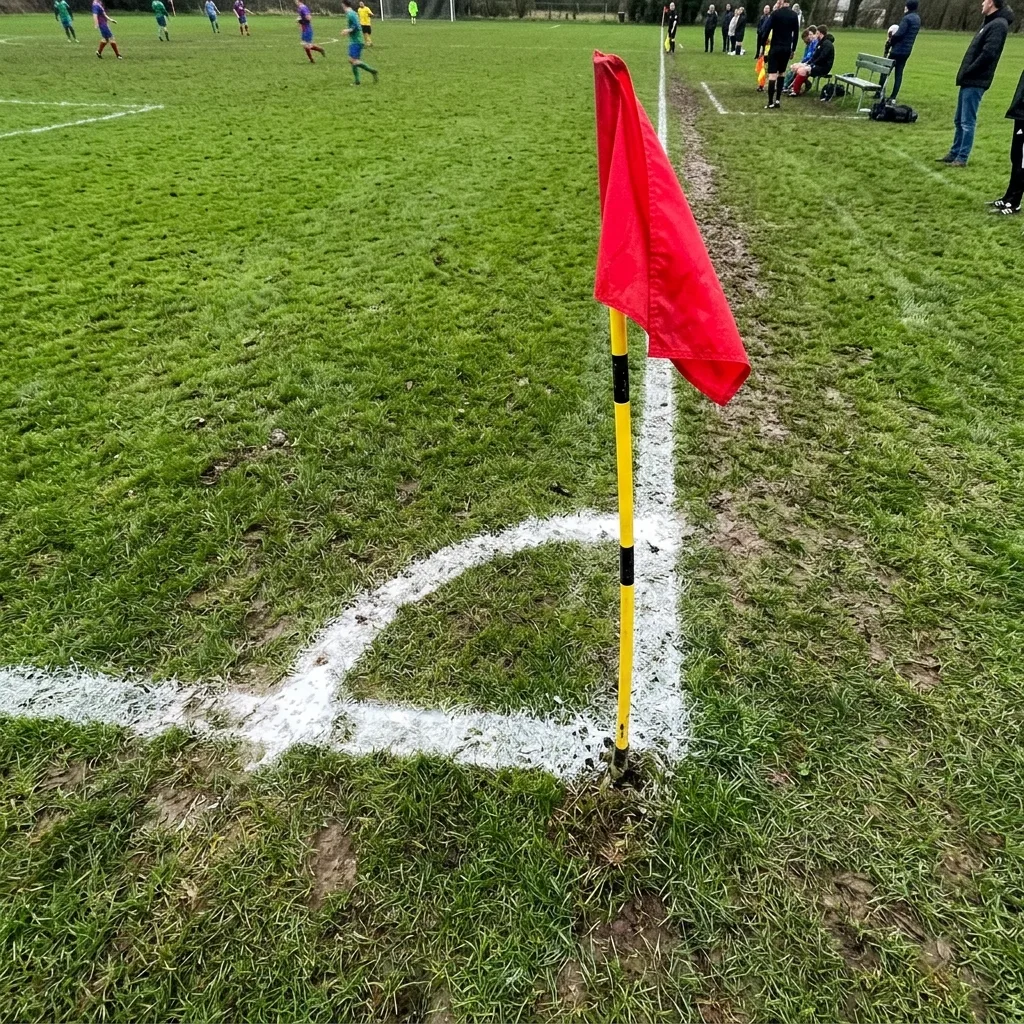
If you need the official soccer field dimensions, the standard rules state a professional pitch must be between 100 to 110 meters in length and 64 to 75 meters in width.
Most fans and amateur players assume that every major stadium features the exact same field footprint.
However, the IFAB (International Football Association Board) actually allows clubs a surprising amount of leeway when drawing their lines. Some teams deliberately shrink their pitch to stifle fast-paced opponents, while others maximize the width to stretch the defense. We reveal exactly how much these fields vary—and how to measure your own—below.
What Are the Standard Soccer Field Dimensions?
When asking how big is a soccer field, you must look at the official rulebook. The regulations demand a rectangular playing surface where the length strictly exceeds the width.
For domestic professional matches, the allowable soccer pitch size ranges quite a bit. But for international matches, FIFA enforces a tighter standard.
They recommend a uniform size of 105 meters by 68 meters (115 yards by 74 yards). This creates consistency for World Cup tournaments and high-stakes Champions League nights.

FIFA Recommended Pitch Sizes for Professionals
The FIFA recommended field dimensions exist to level the playing field for international competition. The long boundaries of the field are called the Touchline, while the shorter boundaries behind the nets are the Goal line.
When a club builds a new premier stadium, they almost always default to the 105×68 meter standard.
However, older historic stadiums sometimes cannot physically accommodate these exact measurements due to tight architectural constraints, forcing them to adopt slightly smaller playing surfaces.
Breaking Down the Field Layout and Lines
Understanding the internal soccer field layout is just as crucial as the outer boundaries.
The Penalty area (or penalty box) extends 16.5 meters outward from each goalpost and 16.5 meters forward into the pitch. Inside this box sits the penalty mark, placed precisely 11 meters from the goal line.
The smaller six-yard box dictates where goal kicks originate. Knowing these exact penalty box dimensions is essential if you ever need to paint soccer field lines for a local tournament.
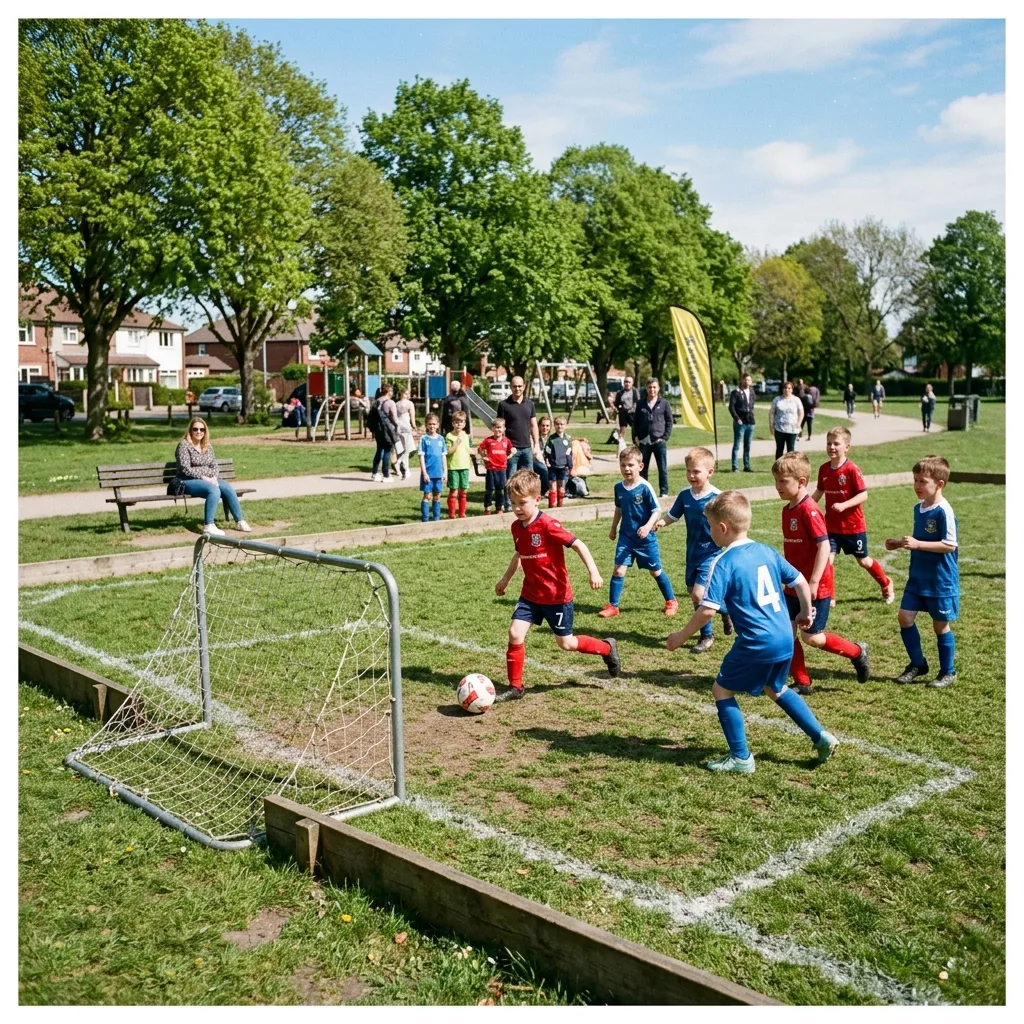
Youth Soccer Field Dimensions by Age Group
Kids cannot cover the same ground as professional athletes. Therefore, youth soccer field dimensions scale down significantly based on age.
An Under-8 (U8) match typically takes place on a micro-pitch measuring roughly 30 by 20 meters. As players age up, the field grows.
Under-12s play on an intermediate pitch, while teenagers eventually graduate to full-size high school soccer field dimensions. This gradual scaling ensures players develop proper technical skills rather than just kicking the ball far and running.
Frequently Asked Questions About Soccer Pitches
How big is a professional soccer field?
A standard professional soccer field must be between 100 to 110 meters in length and 64 to 75 meters in width. FIFA recommends a uniform size of 105 by 68 meters.
Are all soccer fields the exact same size?
No, all soccer fields are not the exact same size. While there is a strict limit set by IFAB rules, clubs can choose the dimensions of their home pitch within those boundaries. Indoor Futsal courts are even smaller, requiring entirely different dimensions.
What are the dimensions of the penalty box?
The penalty box measures 16.5 meters outward from each goalpost and 16.5 meters forward into the field. The penalty spot sits exactly 11 meters from the goal line.
Ready to Hit the Pitch?
Whether you are a groundskeeper painting a fresh stadium or a coach setting up cones for a U10 practice, knowing the right measurements changes everything.
Precision on the field starts with precision in the layout.