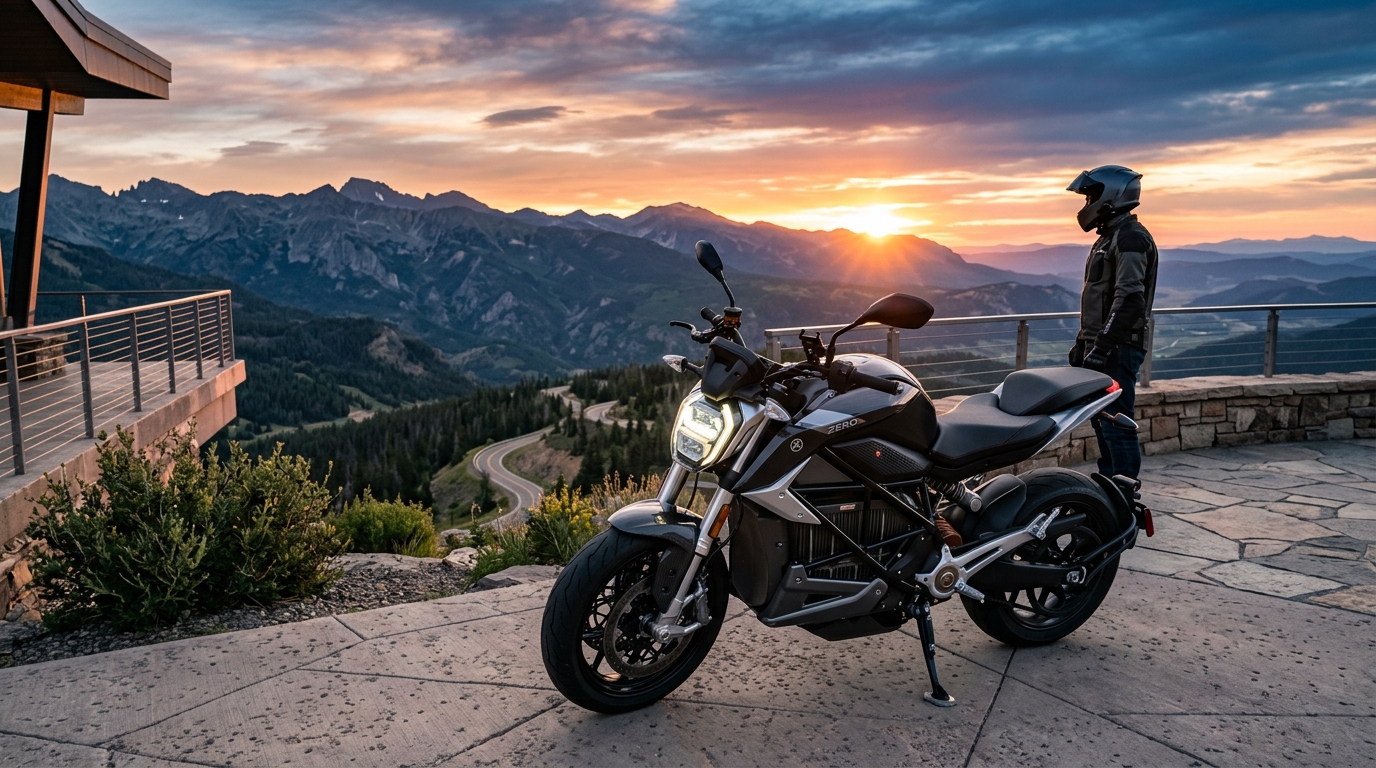
✨ This article was AI edited. Editorial responsibility: Pike Speak Motorsports.
Zero Motorcycle Buying Guide: Real-World Range, Charging Infrastructure & Ownership Costs
Investing in a high-performance electric motorcycle represents a transformative shift in your riding routine, offering instantaneous 100% torque off the line, vibration-free highway cruising, near-zero mechanical maintenance, and operating expenses that undercut gasoline bikes by over 75%. As the benchmark brand in production electric two-wheelers, buying a Zero motorcycle requires understanding specific electric vehicle metrics: kilowatt-hour battery capacities, realistic highway vs. urban city ranges, Level 1 through Level 2 charging dynamics, and total cost of ownership economics. This definitive buyer’s guide breaks down the complete Zero model family, charging logistics, battery longevity data, and ownership considerations to help you select the ideal electric machine.
Understanding Electric Motorcycle Range: City vs. Highway Aerodynamics
The single most important concept for prospective Zero owners to grasp is how aerodynamic drag dictates electric range. Unlike internal combustion engines that achieve their best MPG on steady highway cruising, electric motorcycles are at their most efficient in stop-and-go urban traffic due to low aerodynamic drag and active regenerative braking.
Why High-Speed Highway Riding Consumes More Energy
Aerodynamic drag increases exponentially with the square of your speed. Riding at 75 MPH requires more than double the energy output of riding at 45 MPH. Consequently, a Zero motorcycle with a 17.3 kWh battery pack delivers over 180 miles of range in city commuting, but averages approximately 85 to 95 miles of continuous 70 MPH highway range.
Complete Zero Motorcycles Model Family Comparison
| Zero Model | Riding Style / Use Case | Peak Power / Torque | Real-World City Range | Real-World 70 MPH Range | Battery Pack Size |
|---|---|---|---|---|---|
| Zero DSR/X | Adventure Touring / Off-Road | 100 hp / 166 ft-lb | 180 miles | 85 miles | 17.3 kWh (21 kWh opt.) |
| Zero SR/F | Streetfighter / Naked Sport | 110 hp / 140 ft-lb | 187 miles | 93 miles | 17.3 kWh (21 kWh opt.) |
| Zero SR/S | Aerodynamic Sport Touring | 110 hp / 140 ft-lb | 187 miles | 105 miles (Fairing boost) | 17.3 kWh (21 kWh opt.) |
| Zero S / DS | Urban Commuter / Dual Sport | 68 hp / 97 ft-lb | 154 miles | 70 miles | 14.4 kWh |
| Zero FX | Lightweight Dual Sport Trail | 46 hp / 78 ft-lb | 102 miles | 40 miles | 7.2 kWh modular |
| Zero FXE | Supermoto / City Carver | 46 hp / 78 ft-lb | 105 miles | 42 miles | 7.2 kWh modular |
Charging Solutions & Time Benchmarks
Every Zero motorcycle is engineered to adapt seamlessly to existing residential and commercial charging infrastructures:
1. Residential Level 1 Charging (110V/120V Wall Outlet)
No special electrical upgrades are required. Plugging the motorcycle into a standard 15-amp household garage outlet delivers roughly 1.3 kW of continuous charge. This replenishes a 14.4 kWh pack from 0% to 100% in approximately 8 to 9.5 hours, making overnight charging effortless.
2. Commercial Level 2 Charging (220V/240V J1772 Stations)
Zero’s premium models (SR/F, SR/S, DSR/X) feature integrated 3 kW or 6 kW onboard Level 2 chargers compatible with all public J1772 charging stations (ChargePoint, EVgo, Blink). Level 2 charging takes a depleted 17.3 kWh battery from 0% to 95% in just 1.5 to 2.0 hours, allowing easy top-offs during lunch breaks on weekend rides.
Total Cost of Ownership (TCO): Electric vs. Gas Motorcycle
| 5-Year Ownership Metric (30,000 Miles Total) | Gasoline Motorcycle (800cc Standard) | Zero Motorcycle (Zero SR/F 17.3 kWh) |
|---|---|---|
| Total Fuel / Electricity Expense | $2,714 (42 MPG @ $3.80/gal) | $600 ($0.14/kWh residential rate) |
| Engine Oil & Filter Changes (Every 4,000 mi) | $875 (7 shop oil services) | $0 (No engine oil) |
| Valve Clearance Adjustments (15k & 30k mi) | $1,600 (Major shop labor) | $0 (Direct-drive motor, no valves) |
| Chain Lubrication & Drive Replacements | $550 (Chain & sprocket sets) | $120 (Gates carbon belt lasts 25k+ mi) |
| Brake Pads & Fluid Maintenance | $450 | $200 (Regenerative braking saves pads) |
| Total 5-Year Operating & Maintenance Cost | $6,189 | $920 (Savings: $5,269 Cash) |
Battery Durability & Cypher III+ Digital Ecosystem
Zero Z-Force power packs use state-of-the-art automotive NMC cells rated for over 2,500 full charge cycles while retaining over 80% of original capacity. For a rider averaging 6,000 miles per year, the battery will provide over 25 years of operational service life.
Furthermore, Zero’s Cypher III+ operating system connects directly with your iOS or Android smartphone, allowing you to configure custom ride modes, monitor charge state in real time, locate public charging stations, and receive Over-The-Air (OTA) performance enhancements from the factory.
Frequently Asked Questions (FAQ)
Can I ride a Zero motorcycle on long-distance cross-country trips?
Yes, particularly on models like the Zero DSR/X or SR/S equipped with 6 kW Level 2 rapid charging. Planning routes along highway corridors with reliable J1772 charging stations allows riders to cover 300 to 450 miles in a day with 1.5-hour charging breaks.
What maintenance does a Zero motorcycle actually require?
Routine service is strictly limited to checking tire pressure and tread, inspecting brake pads and brake fluid every 2 years, checking the carbon drive belt tension with an acoustic tension gauge, and replacing fork oil every 15,000 miles.
Do Zero motorcycles have a clutch or gears?
No. Zero motorcycles are clutchless direct-drive vehicles. There is no clutch lever or foot shifter: you simply twist the throttle to accelerate seamlessly from 0 to top speed, and squeeze the right hand lever and right foot pedal for braking.
How does regenerative braking work on a Zero motorcycle?
When you close the throttle or apply the brakes, the Z-Force motor switches into a generator, converting the motorcycle’s forward kinetic energy back into electrical current that flows into the battery pack, increasing range while providing smooth engine-braking feel.